
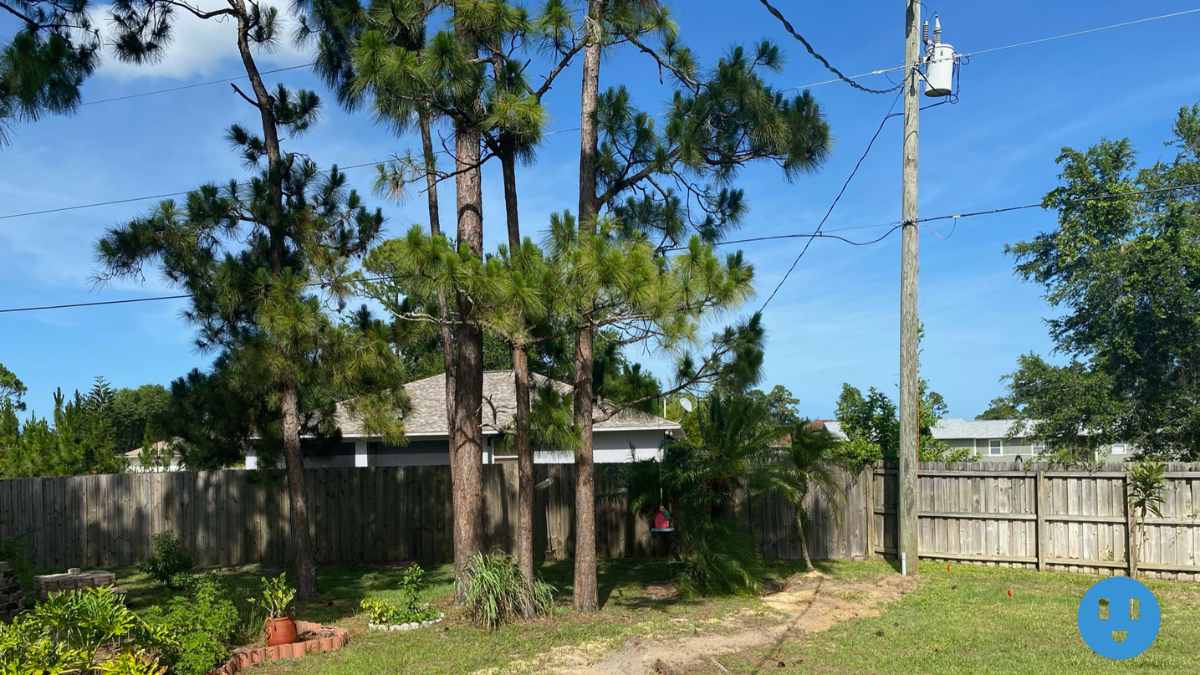
If you are thinking about moving your overhead electrical service to underground, there is a lot to consider — we want to help answer some of the biggest questions that come with this process.
For many homeowners in Brevard County, this upgrade can improve appearance and reduce exposure to weather, but it’s important to understand what’s involved before getting started. Funny enough, we recently received one of these letters ourselves — as homeowners — from FPL, letting us know our own neighborhood was selected for underground conversion at no cost. It’s how we found out about the program firsthand, and it prompted us to update this post with what it actually means. More on that below.
Do You Actually Need to Convert to Underground?
The first thing to consider is whether this is something you truly need to do.
If the answer is no, then this is typically a luxury upgrade.
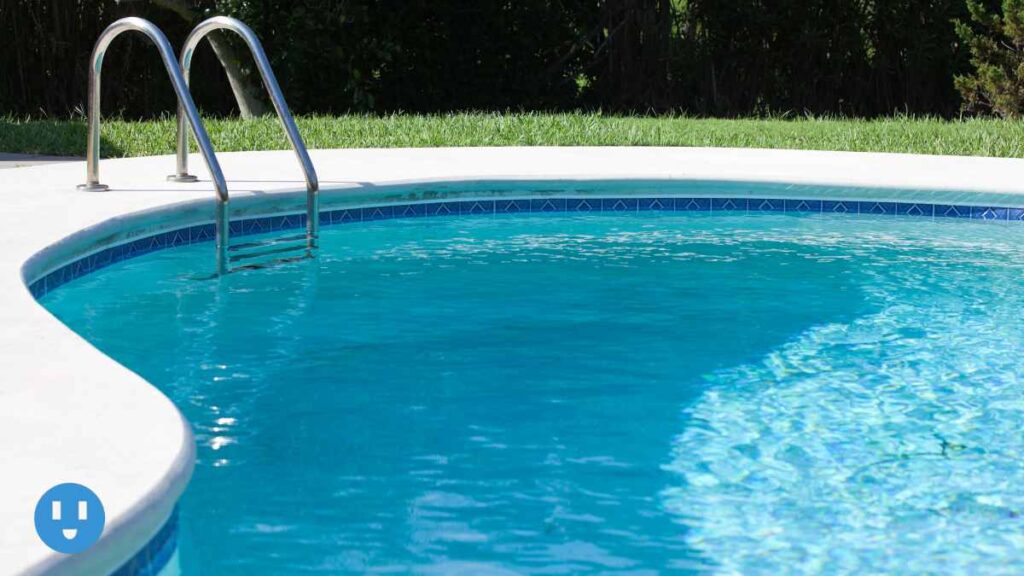
In some cases, it is required — for example, if you’re adding a swimming pool or hot tub. Electrical code does not allow overhead power lines above these areas due to safety risks. An energized line falling near water can be extremely hazardous.
Evaluate Your Existing Electrical Equipment
Before starting, take a look at your current setup:
- Is your meter box rusted?
- Are all covers in place?
- Is your equipment outdated?
Also consider if you’re planning to add:
- EV chargers
- Tankless water heaters
- Swimming pools or hot tubs
- Solar systems
If any of these apply, it may be a good time to upgrade your electrical service alongside the underground conversion.
Understanding Utility Costs with Florida Power & Light
FPL (Florida Power & Light) plays a major role in this process.
- Base cost typically starts around $650
- Can increase to $1,000+ depending on conditions
- Costs may be higher if nearby homes already have underground service
You can review their official process here:
👉 https://www.fpl.com/reliability/underground-conversions/process.html
Make sure you understand who is responsible for paying this cost — the homeowner or contractor — before starting the project.
A quick note if you received a letter from FPL:
Everything above applies to a voluntary conversion — one you request and pay for. But some Brevard County neighborhoods are being converted for free through FPL’s Storm Secure Underground Program (SSUP). If your street was selected, FPL covers the cost of converting the neighborhood’s overhead lines to underground — no charge to you for that portion of the work.
Neighborhoods aren’t chosen by request. FPL selects them using criteria approved by the Florida Public Service Commission (FPSC), prioritizing areas with a history of hurricane-related outages, vegetation-related outages, and other reliability issues. If your neighborhood qualifies, FPL will mail you a letter and follow up with a customer outreach specialist — contact FPL directly for any questions on their program or qualification criteria.
Being selected for SSUP covers the utility-side conversion, but it’s still worth having an electrician confirm your home’s meter, panel, and equipment are ready for the switch. That’s where we come in.
👉 Learn more about FPL’s Storm Secure Underground Program
Access to the Utility Pole
Another major factor is where your power originates.
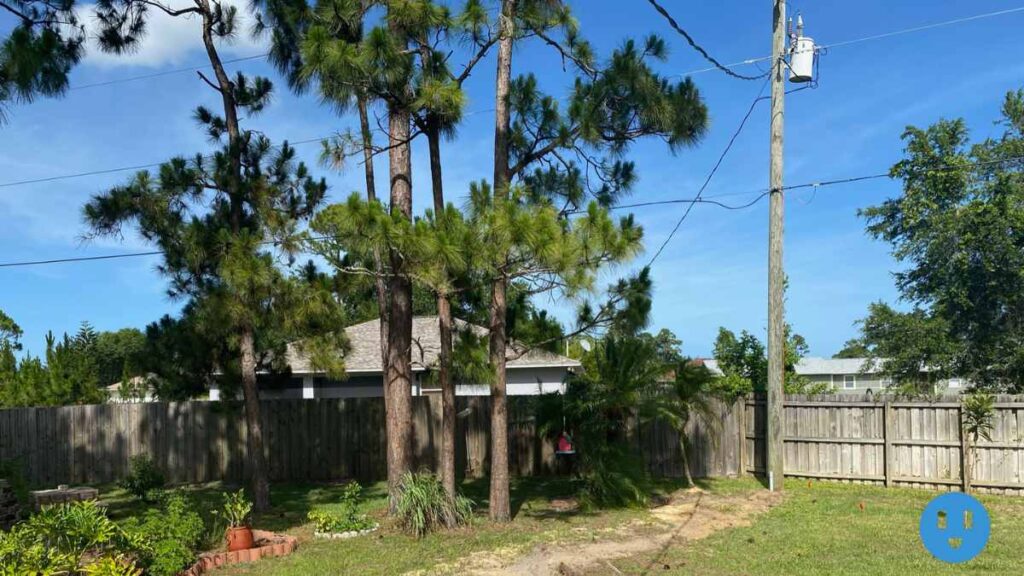
Follow your overhead line back to the FPL pole:
- Is it in your yard?
- Or in a neighbor’s yard?
If it’s in a neighbor’s yard, things can become more complicated — especially if there are:
- Trees
- Fences
- Sheds
- Debris
FPL requires clear access and may ask for photos before approving the project.
If the area is blocked, you’ll need to factor in the cost of clearing it.
Trenching and Underground Work
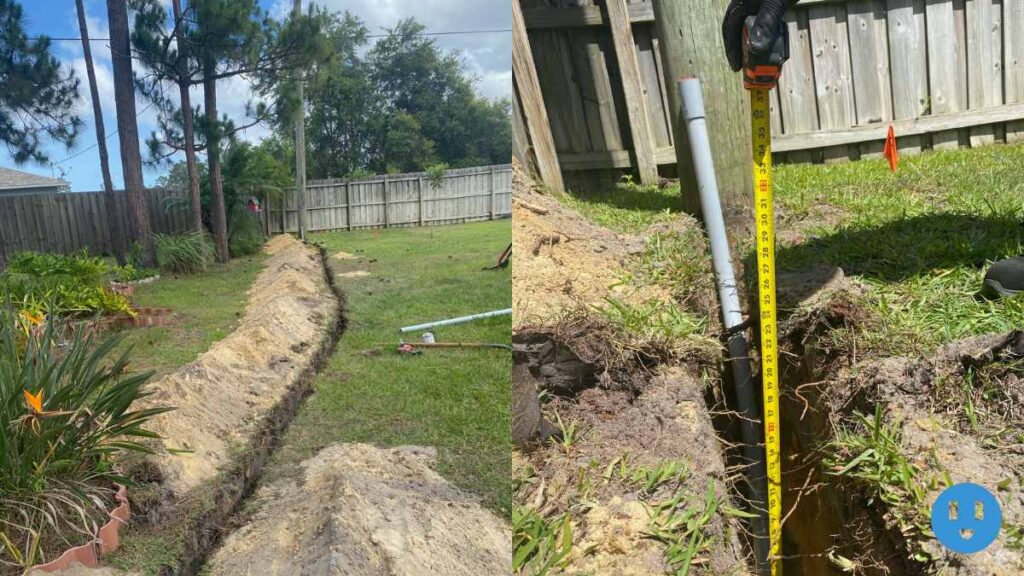
Now let’s talk about one of the biggest parts of the job — trenching.
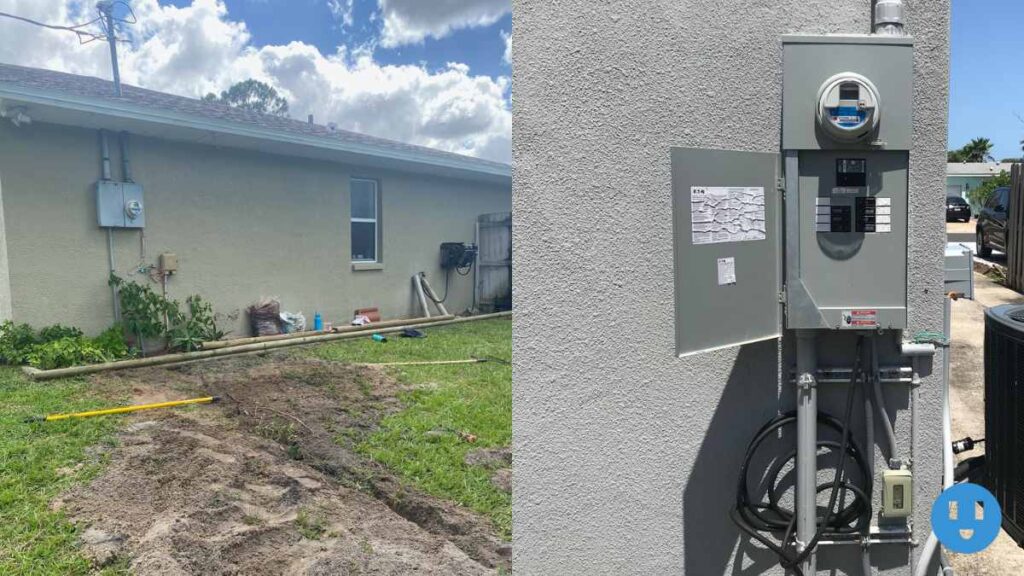
FPL requires conduit to be installed at least 24 inches deep, which usually means digging a trench about 27–30 inches deep.
There is a lot of dirt to move.
Some homeowners choose to dig themselves to save money, which can range from:
- $10–$25 per linear foot
But be cautious — there are risks.
Before digging, always contact Call 811 at least one week in advance.
This ensures underground utilities are properly marked.
Damaging underground lines without calling 811 can result in significant fines and safety hazards.
Also consider what may already be underground:
- Sprinkler systems
- Landscape lighting
- Shed wiring
These are often damaged during trenching and can add unexpected costs.
Electrical Work and Materials
Even if you are not upgrading your interior panel, there are still costs involved.
Material costs alone can range from:
- $1,000 to $2,000
This does not include labor for installing the new meter can and completing the service conversion.
Timeline: What to Expect
In a perfect scenario, here’s what the process typically looks like:
Step 1: Get Estimates
Reach out to 2–3 licensed electricians with experience in underground conversions.
Step 2: Planning & Permits
Once you choose a contractor:
- Permit is submitted
- FPL request is initiated
- 811 is contacted
This usually happens within the first 1–2 weeks.
Step 3: Trenching & Conduit Installation
Work is scheduled once:
- Permit is approved
- 811 clearance is complete
Step 4: FPL Coordination
FPL reviews:
- Your project sketch
- Photos of pole access
They will then issue an invoice. Once paid:
- Conduit is released for pickup (often requires a trailer)
- Installation is completed
- Photos are submitted for approval
Step 5: Final Scheduling
FPL will then schedule the final connection — typically:
- 2–4 weeks out
On installation day:
- FPL disconnects overhead power
- Contractor replaces the meter can
- Inspection is completed
- FPL returns to complete the underground connection
Don’t Forget About Roof Repairs
If your overhead service previously went through your roof, you’ll need a plan for that penetration.
Options include:
- Capping the existing opening
- Hiring a roofer to properly seal and repair it
Final Thoughts
This type of project involves coordination between homeowners, contractors, inspectors, and FPL — and it takes time.
If everything runs smoothly, completing this process in about 2 months is considered a good timeline.
For Brevard County homeowners, the key is understanding the full scope before starting — including costs, access, and timing. And if you’ve received an SSUP letter, part of that scope may already be covered for you.
Still Got Questions?
Whether you’re planning a voluntary conversion or you’ve received a letter about FPL’s Storm Secure Underground Program, we’re happy to walk you through what it means for your home — no pressure, just honest guidance from a licensed Brevard County electrician.