
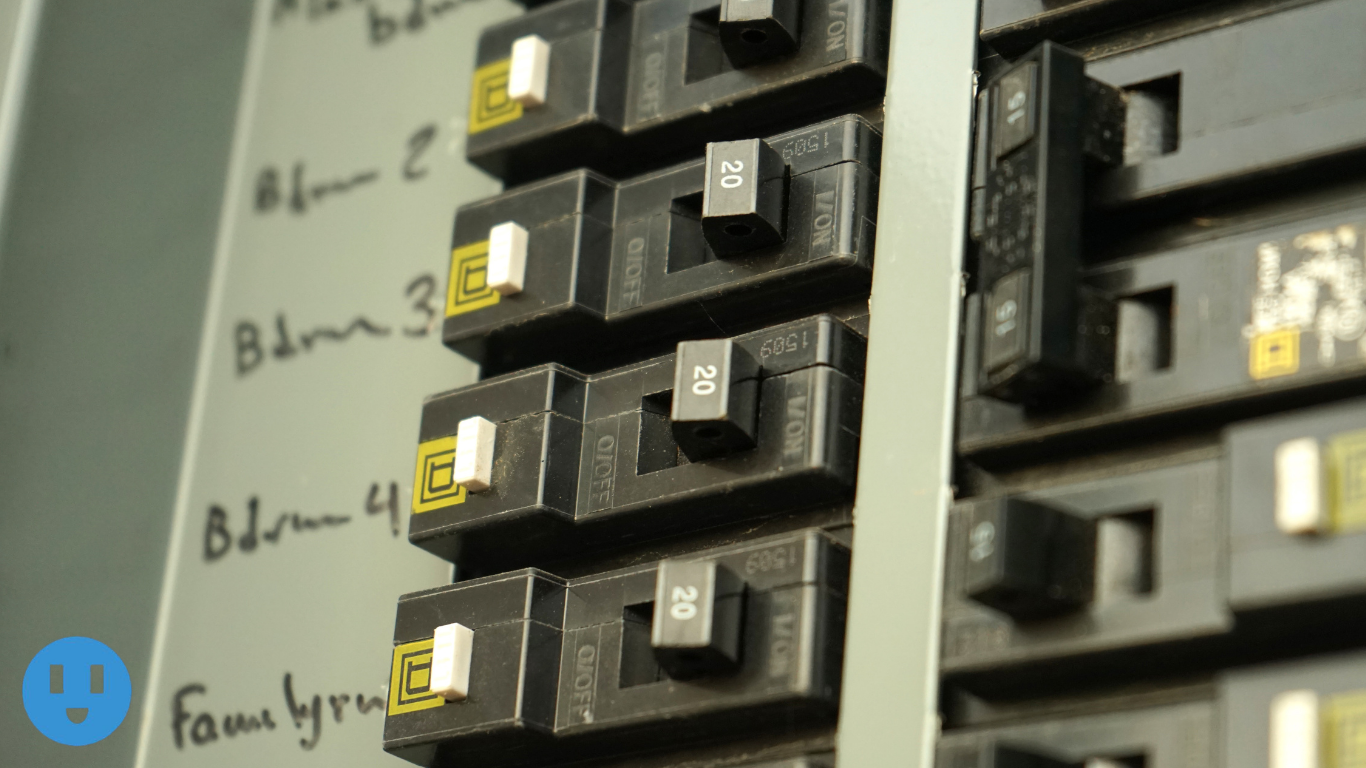
If your breaker keeps tripping, it’s not random ⚡
Breakers are designed to protect your home. When one trips, it’s because something is demanding more power than that line can safely handle.
Take a simple example:
An electric kettle alone can use 1,200–1,500 watts. Now imagine it running at the same time as your microwave, toaster, coffee maker, or space heater — especially if they’re on the same circuit.
That’s when problems start.
Why Breakers Trip
Breakers trip to prevent overheating and potential fire hazards. They are doing their job.
But if it’s happening frequently, it may be a sign your electrical system needs attention.
In many Brevard County homes — especially older ones — kitchens, laundry rooms, and living spaces weren’t originally designed for today’s electrical demand.

Common Reasons Your Breaker Keeps Tripping
If this happens often, it could mean:
• Too many appliances share one line
• Your electrical panel is maxed out
• Worn-out outlets
• Loose wiring connections
These are signs your system may need attention — not just another reset.
Resetting repeatedly without addressing the cause can lead to bigger issues over time.
How to Improve the Situation
If breakers are tripping regularly, here are a few ways to improve your home’s electrical capacity:
✅ Add dedicated circuits for high-demand appliances
✅ Upgrade kitchen or laundry circuits
✅ Evaluate your home’s electrical load
✅ Consider a panel upgrade if capacity is limited
✅ Replace old or worn outlets
Many Florida homes benefit from updated circuits, especially as we add more modern appliances and devices.
When to Take Action
Occasional trips can happen. But if it’s becoming part of your routine, it’s worth checking before it turns into a larger electrical issue.
Understanding your home’s electrical load is one of the most important steps in preventing future problems.
If you’re in Brevard County and experiencing frequent breaker trips, we’re happy to help you evaluate what’s going on and recommend practical solutions.
Still Got Questions?
We’re here to help you make informed decisions about your home’s electrical system — safely and confidently.
GET IN TOUCH