
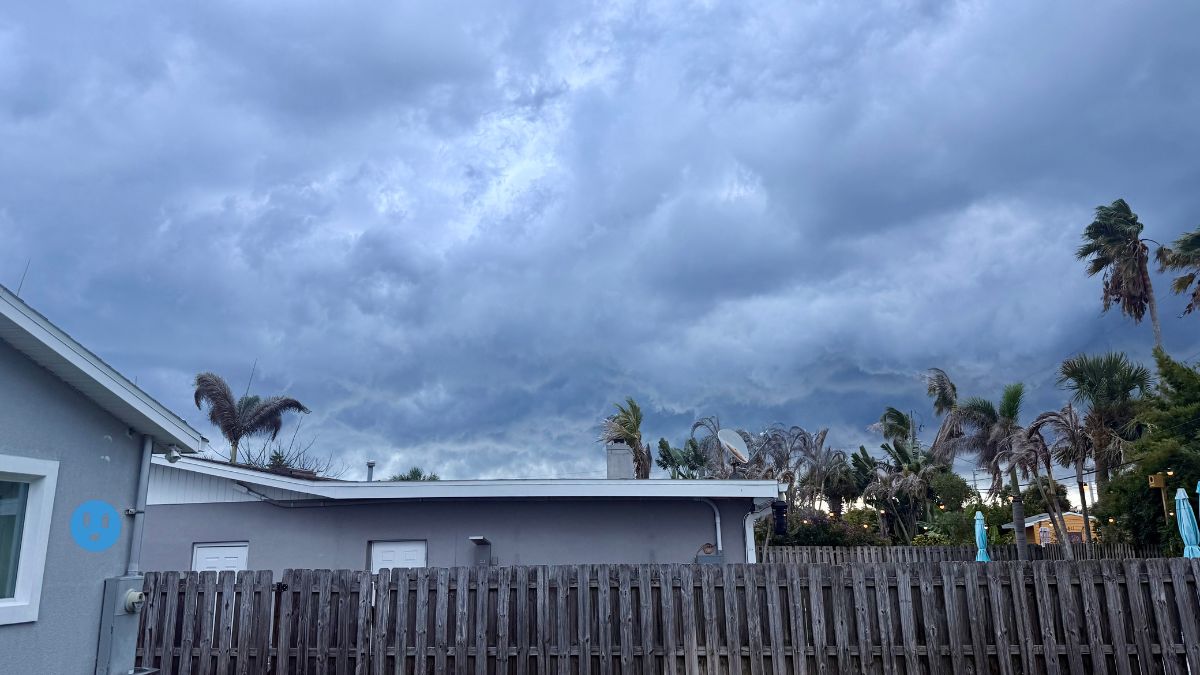
A safe, affordable way to keep the essentials running when the power goes out
We’re right in the middle of peak hurricane season, and if you live in Brevard County, you already know what that means: unpredictable weather, and the very real possibility of losing power for days at a time. 🌀⚡
We get asked a lot whether we install standby generators — the whole-home systems that kick on automatically. We don’t. It’s a specialized service, and there are other qualified companies in our area better equipped to handle it. What we do specialize in is something just as valuable for most homeowners: portable generator interlock installation.
If you already own (or are planning to buy) a portable generator, an interlock is what lets you connect it safely to your home’s electrical panel — no extension cords running through windows, no guesswork, no risk of backfeeding power into utility lines.
What Is a Generator Interlock?
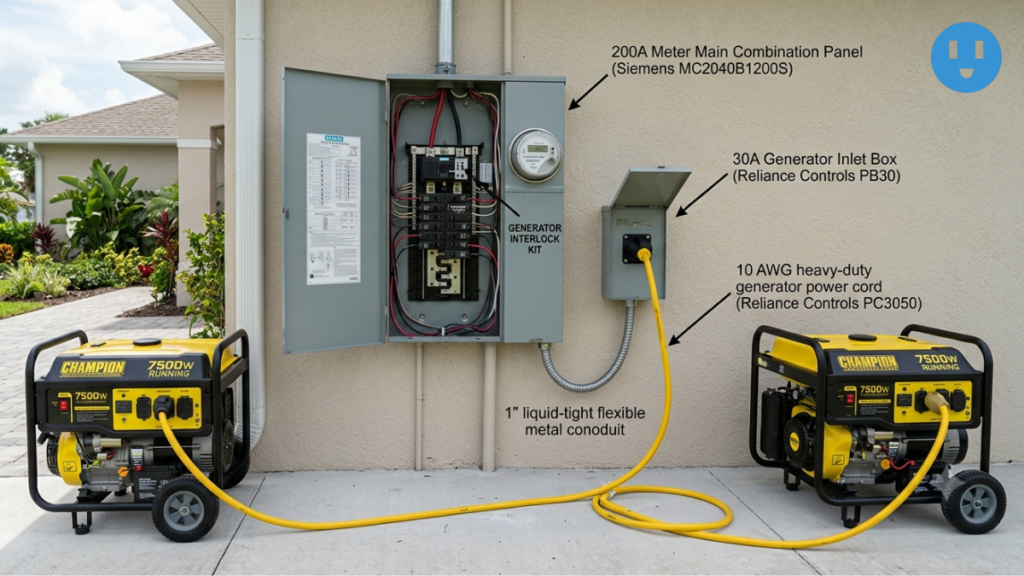
A generator interlock is a small device installed directly on your home’s electrical panel. It creates a safety lock between your utility power and your generator power, so the two can never be connected at the same time.
In plain terms: it lets you flip a switch, plug in your portable generator, and safely power select circuits in your home during an outage — without the danger of sending electricity backward into the power lines, which can injure utility workers and damage your home’s system.
It’s a one-time installation by a licensed electrician, and from that point on, you’re ready every time the power goes out.
What Can You Actually Power?

This is the question we hear most, and the honest answer is: it depends on your generator size and your home’s electrical setup. But for most homeowners running a mid-size portable generator, an interlock typically lets you keep these essentials running:
- Refrigerator and freezer
- Interior lighting
- Fans
- Internet and Wi-Fi
- Television
- Garage door opener
- Phone chargers
- Pool Equipment
- A few outlets — including the one your coffee maker is plugged into, because let’s be honest, that matters during a multi-day outage
It’s not going to run your whole house, and central air conditioning is a case-by-case conversation depending on your generator’s capacity. But for keeping your family comfortable, your food from spoiling, and your home functional through several days without utility power, it’s one of the most affordable backup options available.
What You’ll Need Before We Install
One thing homeowners are often surprised by: most portable generators don’t come with everything you need out of the box. Here’s what typically goes into a complete setup.
Affiliate Disclosure: As an Amazon Associate, All About ElectriCal earns from qualifying purchases. We only recommend products we’d actually use or install ourselves.
1. A Portable Generator — Sized to Your Needs
Sizing is the first real decision, and it comes down to amperage. Here’s how the two most common options compare:
30 Amp — Basic Home Backup A great fit if your goal is keeping the essentials running: fridge, lights, fans, Wi-Fi, and a few outlets. It’s capable of running all or most circuits in your home, with the exception of heavy loads like central A/C. It also uses less fuel, which matters if you’re running it for several days straight. 👉 Shop the 30 Amp Generator we recommend
50 Amp — Advanced Capability If you want more headroom — including the ability to run some heavy loads with caution — a 50 amp generator gives you that flexibility. The tradeoff is fuel consumption: it uses more than the 30 amp option, so factor that into your fuel storage plan. 👉 Shop the 50 Amp Inverter Generator we recommend
2. A Generator Power Cord — Matched to Your Amperage
Your cord has to match your generator’s amperage, so pick the one that corresponds to the unit above.
- 30 Amp Cord: Shop the 30 Amp Generator Cord
- 50 Amp Cord: Shop the 50 Amp Generator Cord
A note on the interlock kit itself
We intentionally don’t link to one here. Interlock kits vary by panel brand, amperage, and configuration, so this isn’t a one-size-fits-all part — it’s something we source and match to your specific panel as part of a professional installation.
A note on safety
The products above are ones we’d genuinely buy for our own homes, and picking the right generator and cord is something you can absolutely do yourself. The interlock installation itself is not — it involves working inside your panel, and should always be done by a trained, licensed electrician. We’re working on a video walking through the full setup process and the proper safety steps, so keep an eye out for that.
Why Installing Now (Not During a Storm) Matters

We say this every year because it’s true:
The best time to install a generator interlock is before you need it, not while a storm is bearing down.
Once a hurricane watch goes up, electricians across the state get slammed with calls, permitting slows down, and supply availability on generators and cords gets tight. Homeowners who prepare in the calmer weeks of the season — or even in the off-season — avoid that scramble entirely and go into storm season already covered.
Is a Generator Interlock Right for Your Home?
If you want an affordable way to keep your essentials running during an outage, already own or plan to buy a portable generator, and want a safe, code-compliant way to connect it, a generator interlock is likely a great fit.
You can see how the options compare in our Backup Power Solutions page. and complete our Backup Power Request Form.
If your goals are bigger— automatic backup, whole-home coverage, or you’re exploring options like Tesla Powerwall — it’s worth a conversation so we can point you toward the setup that actually matches what you need.
Still Got Questions?
Hurricane season doesn’t wait, and neither should your prep. We’re happy to walk you through sizing, installation, and what to expect — no pressure, just honest guidance from licensed Brevard County electrician.