
As our Brevard County community begins to clean up and recover from recent historic storm flooding, all of us at All About ElectriCal are keeping our neighbors in our thoughts and prayers.
While our immediate neighborhood in Satellite Beach escaped the worst of the damage, we know that many of our friends, families, and local businesses—especially those just to the south—were hit extremely hard.
Storm recovery brings unexpected challenges, and for owners of electric vehicles (EVs), e-bikes, and battery-powered equipment, floodwaters create severe electrical and fire risks that require immediate precaution.
Because our team specializes in EV charger installations throughout Brevard County, we want to ensure every homeowner and business owner has clear, actionable safety information.
Below are the official post-flood safety recommendations issued directly by Brevard County Fire Rescue social media post.
1. What to Do Immediately If Your EV Was Submerged
Floodwaters—especially saltwater or brackish storm surges common to coastal Florida—can corrode lithium-ion battery components, causing internal short circuits that lead to thermal runaway or delayed fires hours or even days after the water recedes.
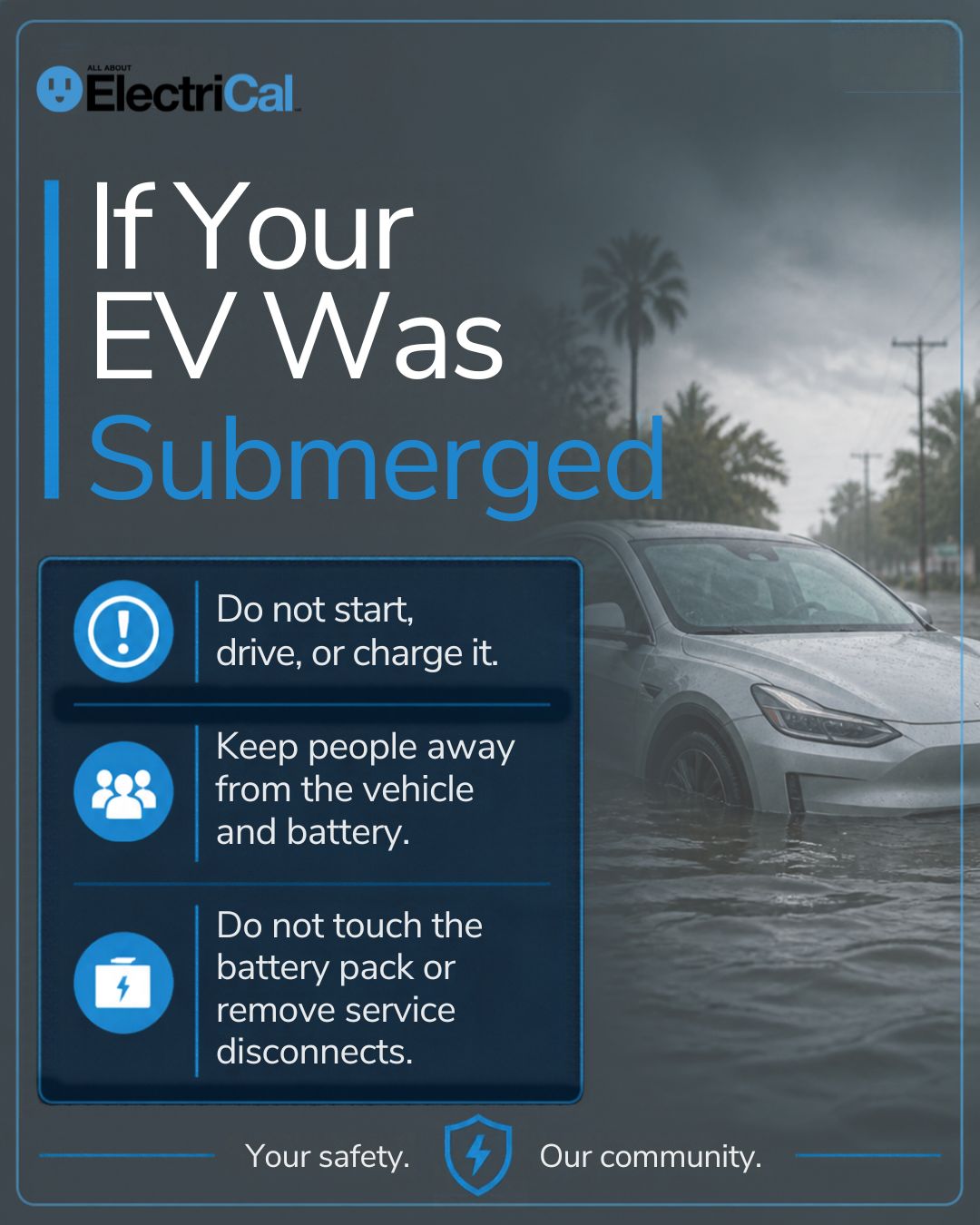
If your electric vehicle was standing in water or submerged:
- Do NOT attempt to start, drive, or charge the vehicle. Plugging a flooded vehicle into your home EV charger or wall outlet can cause severe electrical hazards or electrical fires.
- Keep everyone away from the vehicle. Ensure family members, pets, and bystanders maintain a safe distance from both the vehicle and its battery pack.
- Do NOT tamper with the high-voltage system. Never touch the battery pack, orange high-voltage cables, or attempt to remove service disconnects yourself.
2. Safe Vehicle Storage & Towing Guidelines
Proper handling after the water recedes is critical to preventing structure fires.
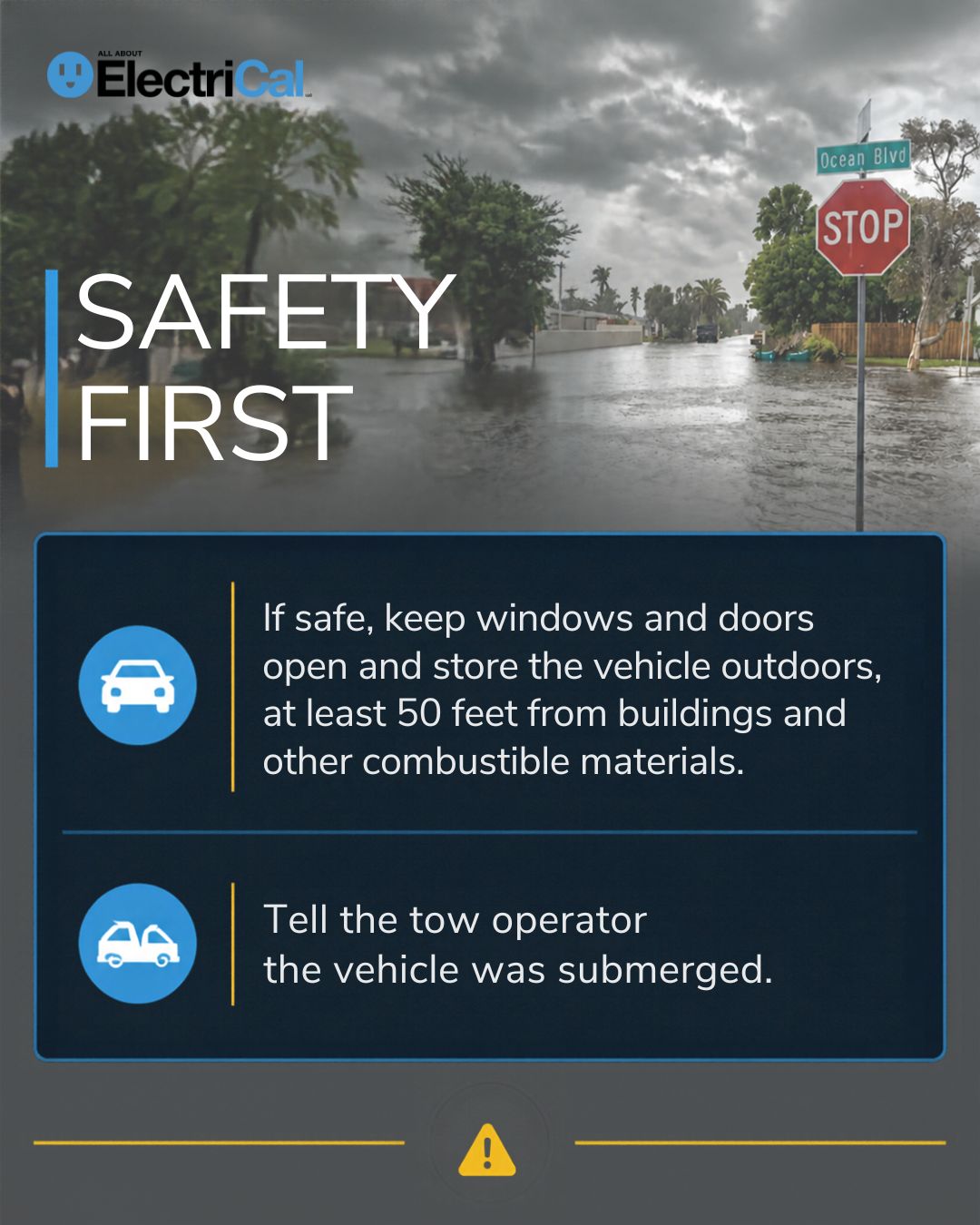
- Store the vehicle outdoors in an open area. If safe to do so, keep the vehicle parked at least 50 feet away from houses, garages, sheds, or other combustible materials.
- Ventilate the cabin. If safe to access, leave doors and windows open to allow trapped gases to dissipate.
- Notify tow operators immediately. Always inform the towing company or recovery service beforehand that the vehicle was submerged so they can utilize specialized flatbed equipment and isolated storage protocols.
3. Warning Signs: When to Call 911
Lithium-ion battery fires can initiate without warning long after initial contact with floodwater. Monitor submerged equipment closely for any signs of battery distress.
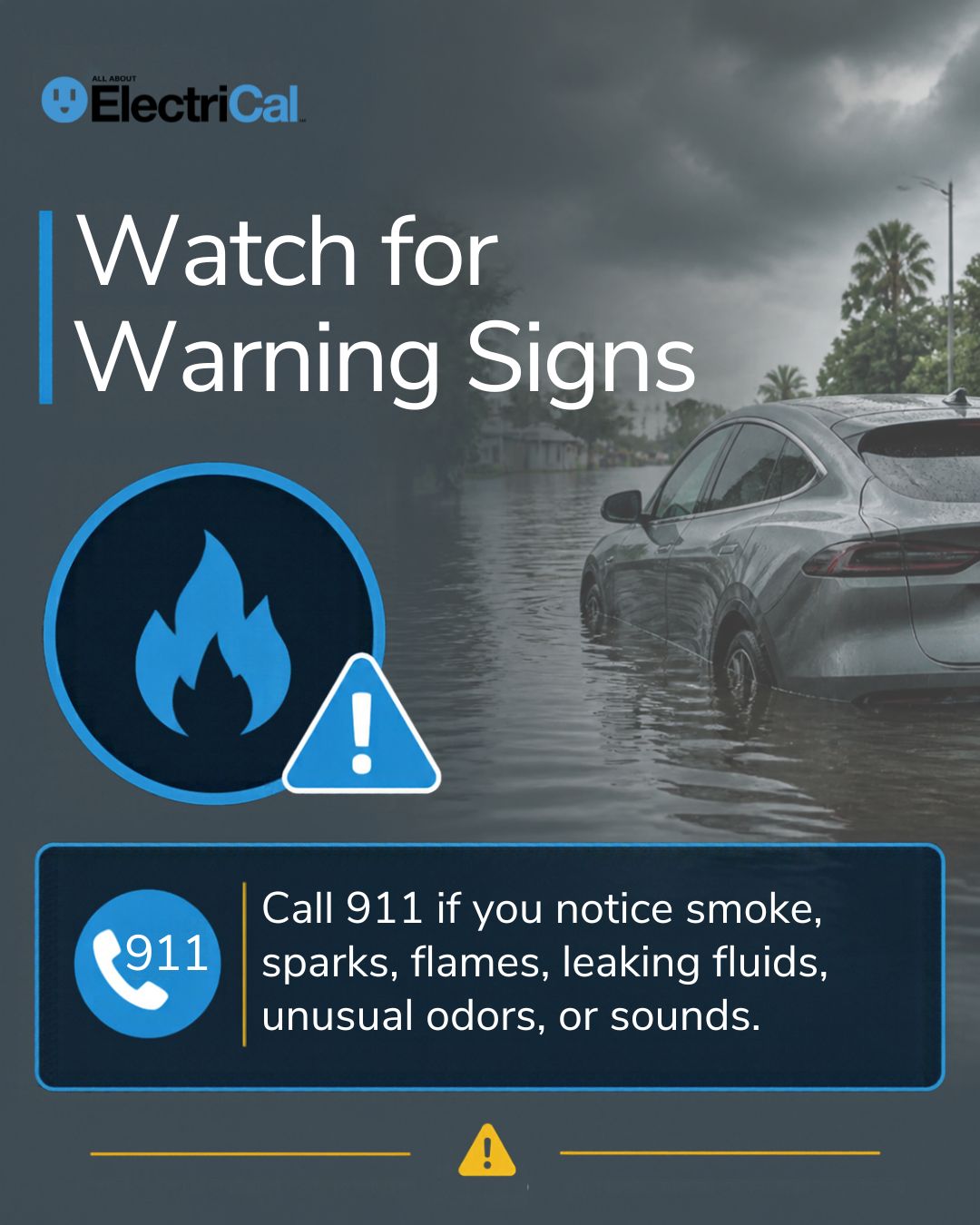
Call 911 immediately if you observe any of the following warning signs:
- Visible smoke or vapors rising from the chassis or battery bay
- Sparks, popping sounds, or visible flames
- Leaking battery fluids or unusual chemical odors
- Hissing or gurgling noises coming from beneath the vehicle
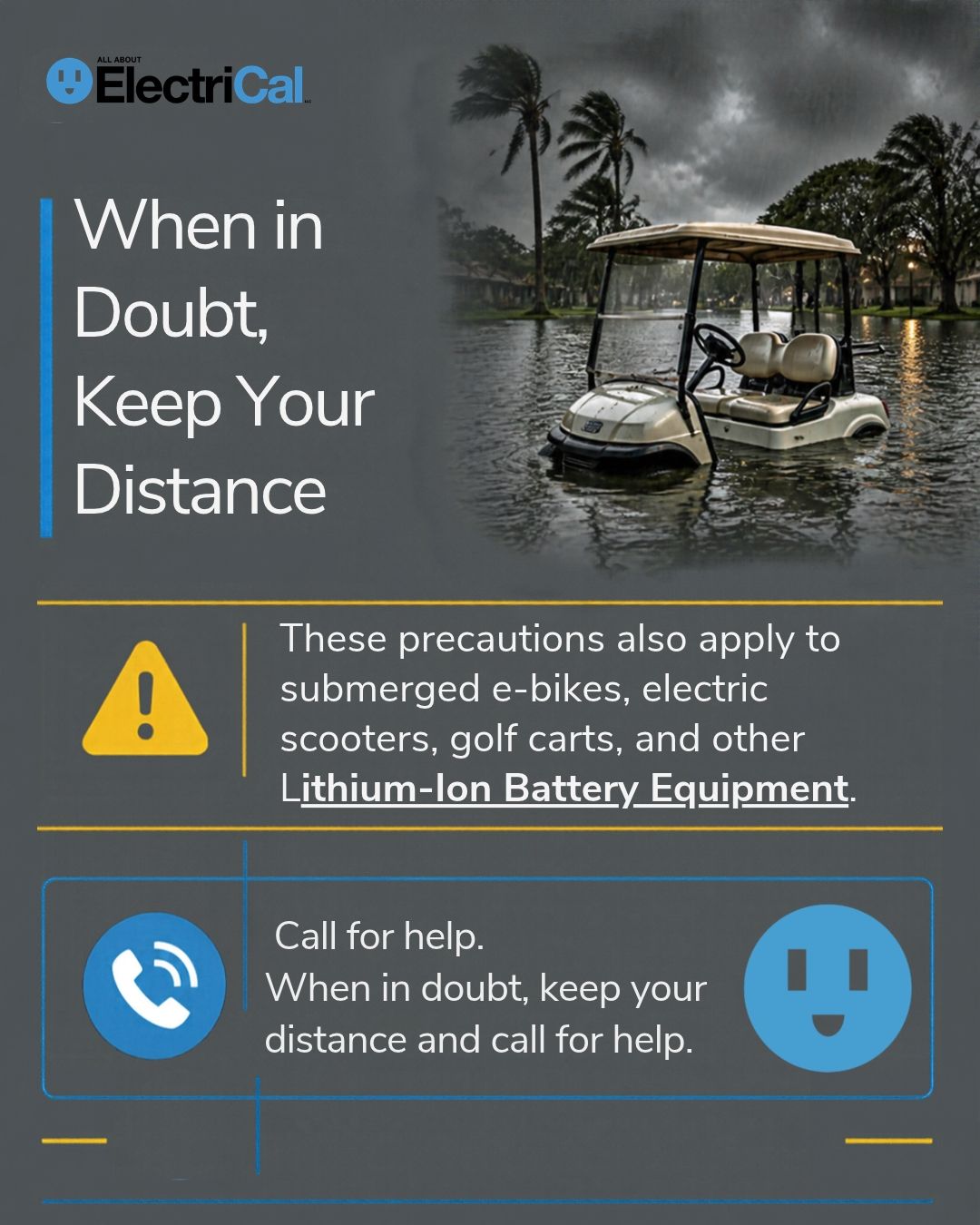
Safety Rule of Thumb: When in doubt, keep your distance and call emergency services right away.
4. Don’t Forget E-Bikes, Golf Carts, and Outdoor Power Tools
These safety precautions are not limited to full-sized passenger electric cars. The exact same risks apply to any flooded lithium-ion battery-powered equipment, including:
- Golf carts and neighborhood electric vehicles (NEVs)
- E-bikes and electric scooters
- Lawn mowers, weed trimmers, and cordless power tools
Store flooded e-bikes and golf carts outside away from structures, and never attempt to charge a battery pack that has come into contact with water.
Getting and Giving Help in Brevard County
Key Community Resources & Contacts:
Recovery is a team effort, and staying connected is key. If you are looking for local relief efforts or want to lend a helping hand to impacted neighbors, check out local community drives such as Vibe & Dine Brevard’s Flood Relief resources.
If you or someone you know in Brevard County needs post-storm assistance, shelter, or hazard reporting, use the following trusted local resources:
- 211 Brevard Helpline: Call 2-1-1 or visit their portal for 24/7 access to local emergency shelter locations, disaster food distribution, utility assistance, and community recovery aid.
- Brevard County Emergency Management: Visit the official county EOC page (or EMBrevard.com) for real-time flood updates, damage reporting, sandbag distribution, and disaster declaration notices.
- Florida Power & Light (FPL) Hazard & Outage Portal: Call 1-800-468-8243 or report online to alert FPL of downed power lines, damaged exterior meters, or electrical service drops in flooded yards.
- United Way of Brevard Community Relief: Connect directly with local volunteer opportunities or donate to local recovery funds targeting heavily impacted Space Coast neighborhoods.
- American Red Cross (Space Coast Chapter): Access emergency disaster relief supplies, temporary housing assistance, and clean-up kits for flooded homes.
- Brevard County Storm Debris Collection: Check guidelines and pickup schedules for curbside bulk waste, damaged appliances, and flood debris removal.
If you have questions about your home’s electrical panel, post-storm safety inspections, or inspecting your charging setup after heavy rain, our certified electricians are here for you. Explore our full range of EV Charging Station Installation Services or reach out directly to speak with our local team.
Your safety. Our community.
Need Help or Have Questions?
We’re always here for our Brevard County community. If you have questions about your electrical setup after the storm or need expert advice, feel free to reach out.